Fruits and Inflation

Happy New Year! The new year will bring much innovation and productivity, yet it is in a predicament — inflation.
Everyone knows what inflation is — it’s the eggs in grocery shops costing more and more and your spending power becoming less and less. But what is inflation exactly, and what do fruits have to do with it?
In its simplest definition, inflation means a medium of currency (i.e., a dollar or a pound) losing value. How this occurs is based on the simple principle of supply and demand, something most of us have encountered at some point in our life. Supply and demand go like this — if the supply outstrips demand, the item costs less and less. And if the demand outstrips the supply, then the item costs more and more. Thus, inflation is just the result of demand outstripping supply. There are two main ways this happens:
A sudden increase in demand — think of at-home exercise sets at the start of the pandemic — the number of people who wanted to have home gyms suddenly quadrupled overnight, so the price went up.
A sudden decrease in supply — think of the Ukraine War making it harder to get oil, and so on.
Now that we have the general gist of how inflation works, let’s look at the specific causes of inflation last year brought us:
For demand,
Covid-19 brought a new demand to tech and stay-at-home set-ups. However, recently, many people increasingly went to restaurants to “get out,” which increased demand in multiple sectors.
Additionally, the three Stimulus Checks (In the US specifically), which were sent out as covid-19 relief measures, also increased demand as many people now had additional money to spend
For supply,
The Russian invasion of Ukraine led to a shortage of oil and other energy, which drove up prices in the energy sector
The pandemic shut down many manufacturing plants, which drove up the cost of common everyday items
Going into the new year, the US Treasury hasn’t left us unprepared. The primary way to fight inflation is to, well, decrease demand and increase supply — it’s a relatively simple principle. So, how do you do that? Well, the Treasury has a trick up its sleeves:
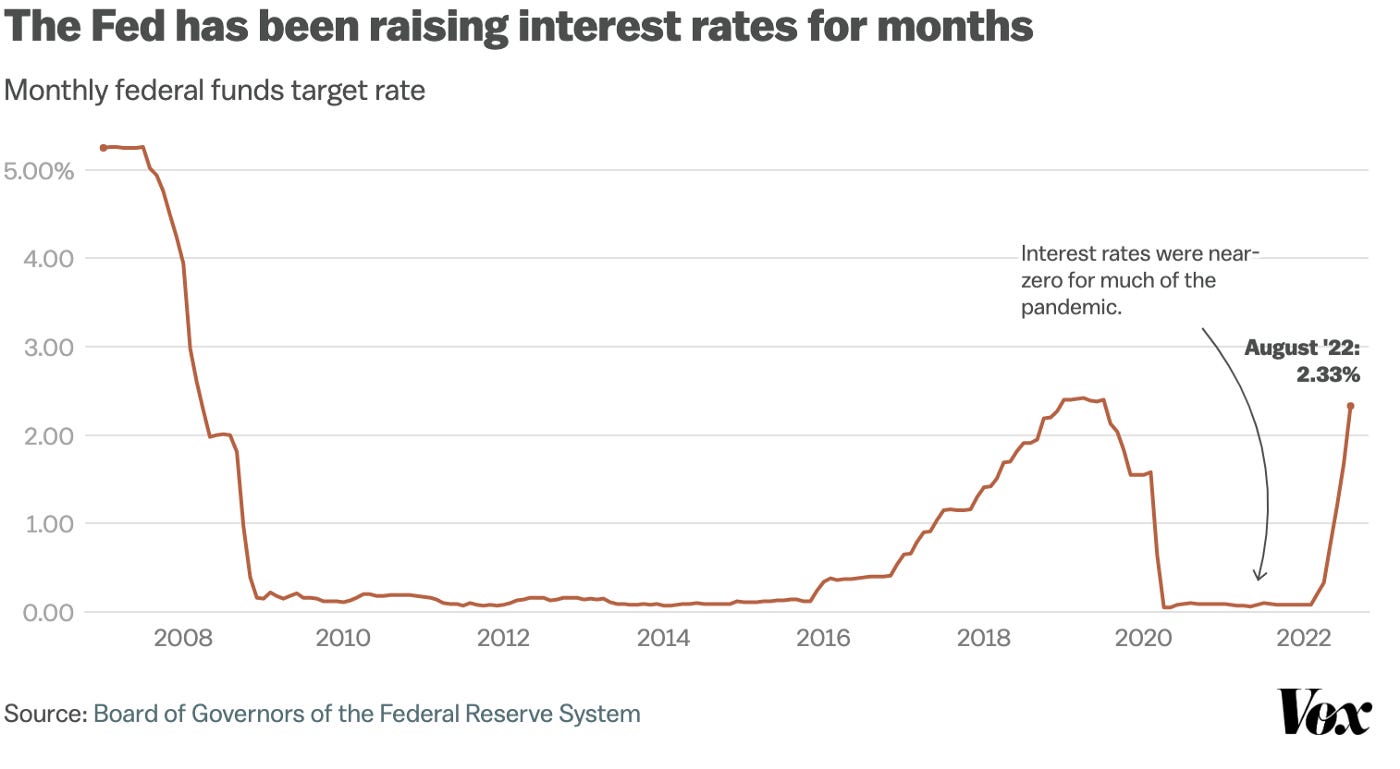
Raising Interest Rates: You’ve probably heard the news lately — the Fed is increasing interest to x amount. While it seems like it’s doing nothing, rising interest rates lowers demand by making it harder to get loans and spend money.
However, there are other ways to fight inflation. For example, consider being healthy. A recent study concluded that for every 1% reduction in medicare costs, inflation could reduce by as much as 15 basis points. That means if everyone using medicare stayed fit (say, cutting medical costs by 5%), then inflation could reduce up to 75 basis points.
Yet, in the end, inflation is a money problem. If money is spent less, then it will be valued more. For the new year, we all should look at inflation and think of what we should do to curtail it, such as eating your daily fruits and veggies :).